Chris Wessling
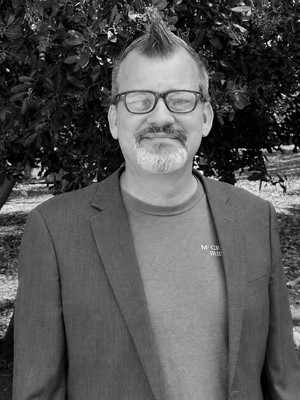
Chris Wessling has spent twenty-five years doing one thing in a lot of different rooms: finding where good people get stuck inside complicated organizations, and building the systems that get them unstuck.
He started in the United States Navy, as an electronics technician in the submarine service, responsible for the instrumentation that keeps a nuclear reactor readable and safe. It was there he learned the idea that still runs through everything he does. Handed a fleet-wide control-system modification and a workbench three feet wide in a busy passageway, he did not just grind through it. He borrowed a fully equipped facility up the road, ran the work in parallel, tested it off-line, and finished so far ahead that the shipyard became the thing everyone was waiting on. The constraint, it turned out, was never the task. It was the conditions everyone had quietly accepted for doing it. The Navy gave him an Achievement Medal for the work. He has been applying the same lesson ever since.
From there he moved into the most demanding corners of American industry. He ran precision manufacturing and metrology at Nikon and Nanometrics, the kind of companies that build the machines semiconductors are made on, and then moved into medical device manufacturing at Mizuho OSI, where the stakes are measured in surgeries. At one point a breakdown in FDA-required certification tracking was being treated as a training problem. It was not. Field engineers simply could not get the information they needed to do their jobs, and every request took about nine hours to fill. At the far end of that delay, hospitals were losing surgeries to the wait. Chris rebuilt the information path and took nine hours down to thirty minutes. Not with more training. With a system.
Along the way he became a performance-excellence examiner. He holds a CAPE examiner appointment through the California Awards for Performance Excellence and a Gold-Level examiner credential from the American Health Care Association, and that work taught him what most quality programs get wrong. Two years into leading a major excellence application, he realized no one in the room, including the paid consultants, could say what the organization should actually do to get better. They could only describe what it already did. So he took the criteria apart and rebuilt them into something that points at what is broken instead of what looks good. That teardown is still the engine behind how he reads an operation today.
The most recent stretch has been his own consulting practice and an operations leadership role at a pre-IPO cyber security company, where he built the processes, the data architecture, and the weekly rhythm that surfaces blocked handoffs before they cost anything. It also taught him the humbling half of the job: a change is only real if it is still running a year after you have gone. Adoption is not the last step. It is the whole game.
That conviction is why Solomon Group exists. Everyone is racing to bolt AI onto operations that do not yet work, and AI is only ever as good as the operation underneath it. Solomon gets mid-market operations genuinely ready for AI, installs it with the people who have to use it, and proves the adoption held at day ninety, measured in revenue, not activity.
Chris holds a Master of Arts in Global Leadership and is based in the San Francisco Bay Area.
← Back to Leadership